Choosing a Session Boundary in a Market With None
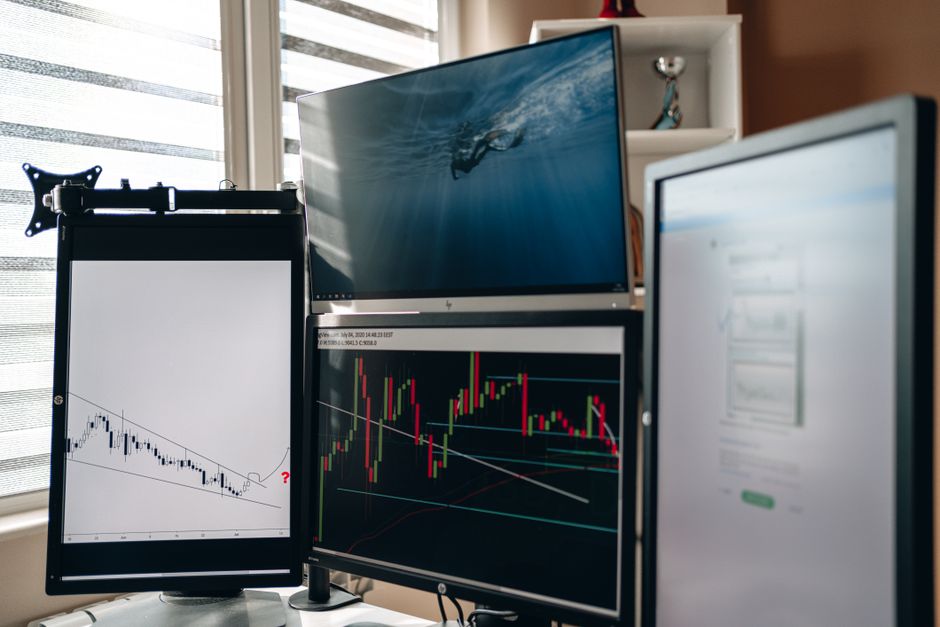
In a market that closes, the opening range is handed to you. Interest accumulates while the venue is shut and arrives together when it reopens, and the first period of trading is a genuine auction between participants who have all been waiting. A continuously traded market gives you none of that. Nothing accumulates because nothing was blocked, and the moment you call the open is a decision rather than an observation.
What the Traditional Open Actually Provides

It is worth being precise about what is being imitated, because that determines whether an imitation is possible. A conventional open concentrates three things: order flow that queued overnight, information that arrived while the venue was closed, and the attention of participants who trade at that hour by habit or obligation. The range that forms is a record of those forces resolving against each other.
Continuous markets have information arriving at all hours and being priced immediately. What they do retain is the third element. Attention still concentrates, because the people trading are mostly awake on some schedule, and volume on almost any instrument follows a daily shape rather than being flat. That residual concentration is the only thing an artificial boundary can hook onto.
The Common Candidates

Borrowing a traditional market open is the most popular approach, and the reasoning is that a meaningful share of participation still follows those hours. It has the advantage of aligning with when related markets are moving, which matters if the instrument responds to broader conditions at all.
Using the daily boundary your exchange applies is the tidiest option and the weakest one. It is a bookkeeping convention with no particular behavioural significance, though it does have the modest merit that other people watching the same chart see the same line.
Choosing the hour where volume reliably picks up on your specific instrument is the most defensible and the most work. It requires actually looking at the daily volume profile over a decent stretch, and it may produce a different answer for different instruments, which is inconvenient but honest.
The Cost of Moving It
Whichever boundary you pick, the serious risk is not that it is suboptimal. It is that it becomes negotiable. A boundary that shifts after a run of poor sessions is not a parameter, it is a way of searching for a version of history where you did better, and it makes your record uninterpretable because no two months were measuring the same thing.
This is a sharper problem here than in a market with a real open, where the boundary is simply a fact and cannot be adjusted. Having chosen a number yourself, you know it could have been otherwise, and that knowledge is available every time the current choice looks unlucky.
Testing Without Fooling Yourself
The boundary should be tested, just not continuously and not in response to results. Reviewing it on a fixed schedule, against a stretch of sessions long enough that individual outcomes do not dominate, is a different exercise from adjusting it because last week went badly.
The thing worth measuring is not which boundary produced better outcomes over the sample, which is mostly noise at any realistic sample size. It is whether the ranges formed after that boundary have the properties a useful range needs: edges that get tested more than once, a height that is reasonably consistent from session to session, and a period that ends with something actually established rather than mid move.
Accepting the Arbitrary Part
Some of this cannot be resolved and the honest response is to say so. A session boundary in a continuous market is a convention, and its usefulness comes largely from being applied consistently rather than from being correct. That is not as unsatisfying as it sounds. A great deal of what makes any range approach work is having a fixed reference that you did not choose after seeing the day unfold, and a boundary picked in advance and left alone delivers that whether or not it was the best available choice.